On June 12, the doe moved the fawn from its spot by the pool deck and I no longer knew where it was. I’d already realized mowing and weed whacking were on hold if the doe was going to keep the fawn here, but I went out and looked at the paddocks anyway. I walked around in one section carefully, wondering if I could work in at least small spots. But, nope. Not really. I didn’t want to risk chasing the mom off because she’d chosen one of the safest spots in the neighborhood. On the way out of the paddock area, I stopped to look at a small stand of grain I didn’t remember planting and hadn’t noticed before. I stood and fiddled with it, took a pic to ID, messed with some barely emerging seed head spikes, and then looked down and the fawn was right next to my feet in a tall, dense stand of catnip. I barely saw it. I left immediately, glad to see it in a good, tucked away spot. The 10th and 11th had been warm and sunny, but there was supposed to be some weather coming.
That night, the weather came.
It went something like this for two days and three nights…
People seem prone to note how well wild animals adapt to their conditions, aka, “they’ll be fine.” But watching a newborn fawn lying on the ground in low enough to be harmful temps and drenching skies add some nuance to that claim. I was distressed watching the weather change, even knowing deer had been raising fawns since the Miocene and things would likely be fine. But things aren’t always fine with fawns.
Plants have overnight temperature limits, and even temps that don’t kill a plant can impact it badly. Same, apparently, for fawns. There are some great deer information sites on the web: state wildlife agencies, non-profit groups, research, projects. Everything I looked at said early cold rain, especially if extended, can threaten a newly born fawn’s life and impact it’s developing immune system. We were forecast to drop to 45 degree overnight lows with multiple heavy rain storms and rain for three nights and two days. It rarely rains like that here, but it’s what we got.
Annual fawn survival rates appear to run from 30 to 70 percent, depending on the year and incidents like fire or excess predation. I had to have some little conversations with my very human brain about how if a fawn died on the property, it would be sad, but still part of a natural process and how, in reality, there are fawns I don’t know about dying every year. I don’t get a say in any of it.
There could be a situation when I’d seek input on intervening with an injured wild animal, but this wasn’t one of those situations. This was between the doe and the fawn and the sky. I was just here to watch, and maybe learn something or at least see something in a new way. There are spots in my experience with the deer here where it’s excruciating to watch. It’s not anthropomorphism, just IRL empathy for other living beings. Deer and their ancestors have been doing life for millions and millions of years, just not in front of my eyes. But a highlight of what this whole risky weather thing revealed to me is that all over the Pacific North West— at a certain time in the spring— there are thousands and thousands of fawns on the ground. All over the place. That’s amazing. So I just buckled up and got practical about it all and refocused on what a special event was unfolding in front of me despite the uncertain bits.
I did check on the fawn a few times, careful to not disturb it or cause even a micro-addition of stress, and only after verifying mom wasn’t around. Mostly it was snuggled in a curled-up position, looking healthy, and just breathing quietly, gaining more life from the legendary fat in deer milk. Once I did see it shivering, but it didn’t otherwise seem to show any distress. It was still curled up and breathing steady. I reminded myself the purpose of shivering is to raise body temperature and went about my business. Next time I checked, no shivering. Just a little body learning how to run itself. A little body that is the place where it lies. More than once I thought, I hope these little things grow fast. And they do.
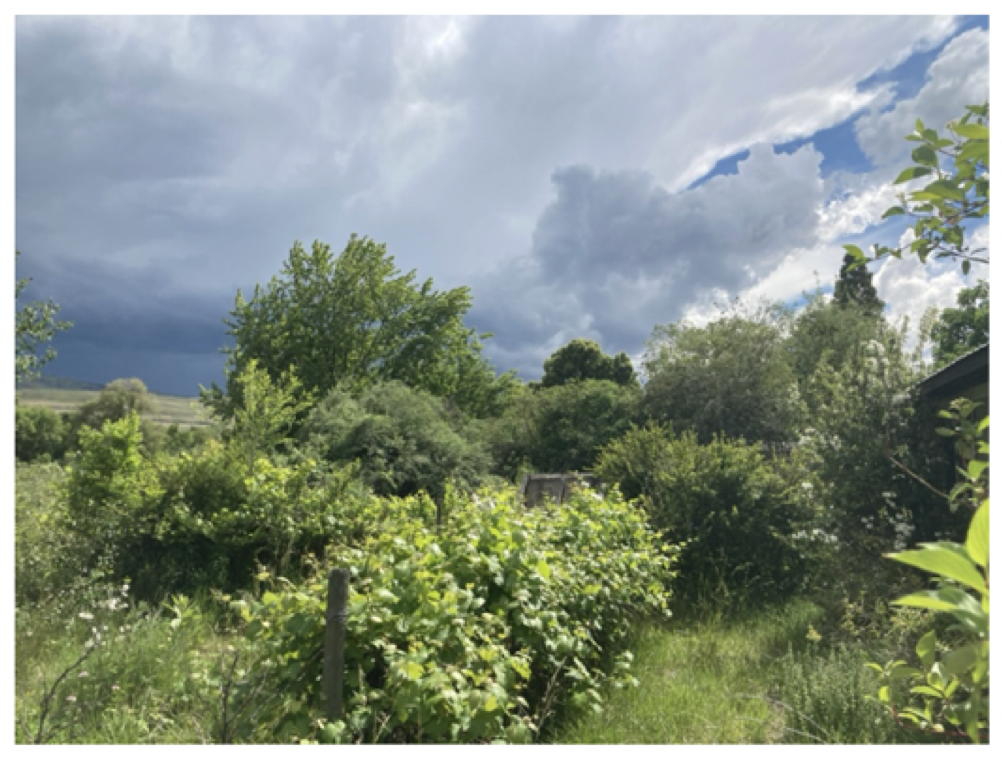
After two and half drenching days, we finally got a cool and cloudy one without rain. The sun broke through in late afternoon after the catnip stand was already in the shade. Still, the air warmed up a bit. The next day, the weather turned sunny, the doe moved the fawn again, and I had no idea where it was for about a week. But in the interim, the doe had stayed on the property, calmly browsing and often sleeping on the bank. Things looked fine.


Leave a Reply